
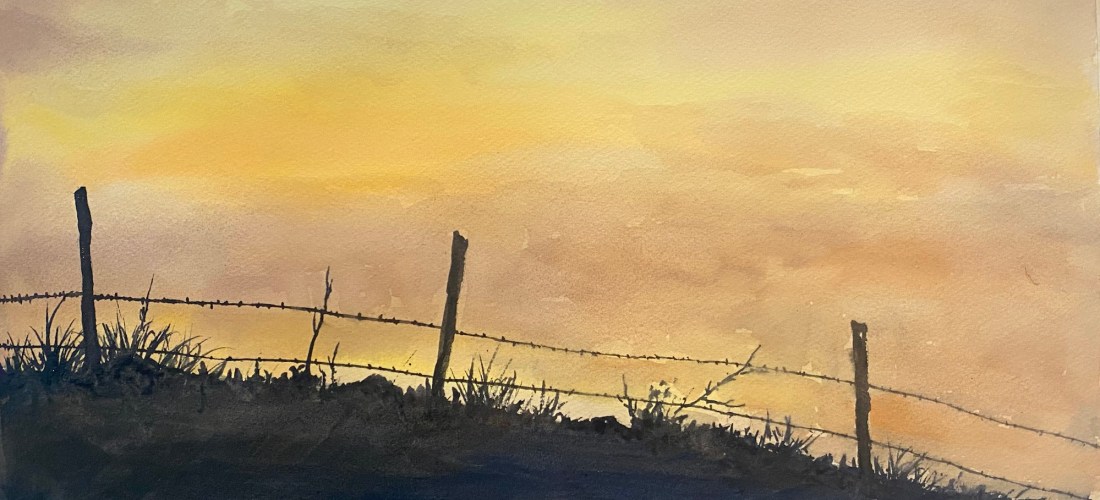
I believe the easiest way to achieve an almost photo-realistic effect in watercolor is to paint a silhouetted landscape! The reason it is less challenging is because there are less problems to solve when it comes to defining values. In a silhouette painting, there are only 2 main values – light and dark. In contrast, when we paint a still life or a painting which takes place during the day with the light coming from a certain direction, there are usually many more values, in addition to only the lightest and darkest areas. Therefore, with a silhouette painting – there is a lot less room for error.
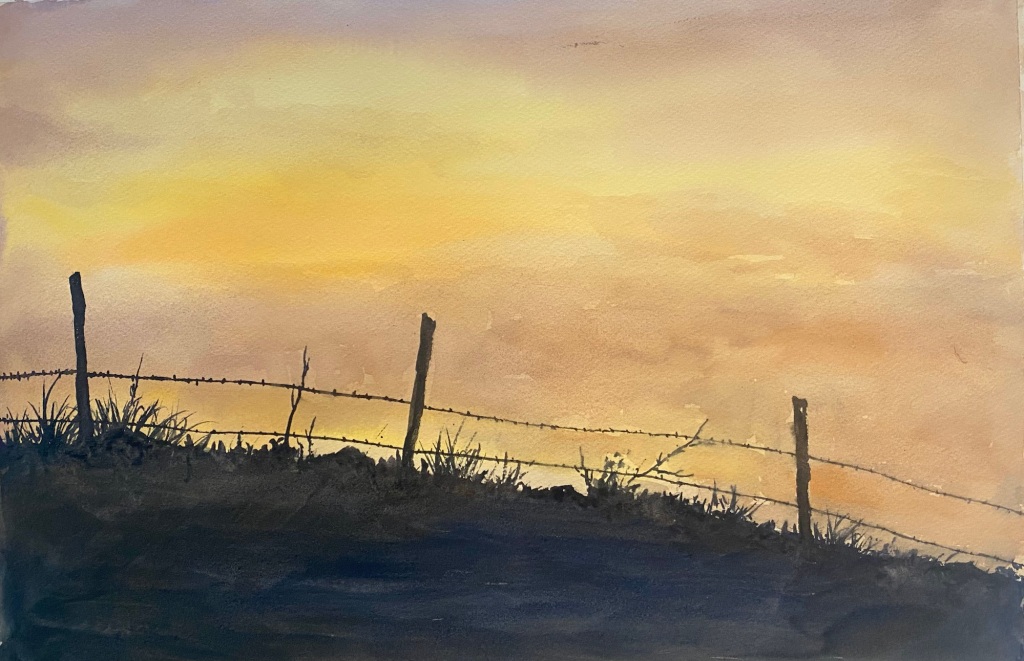
I’m not saying that there isn’t a certain degree of difficulty in a silhouette painting. There will be challenges, such as –
1) Achieving a dark enough value.
In watercolor, when we initially put down color – it will always dry lighter than when we first applied it. So, the challenge will be in adding additional washes of darker color to finally achieve a dark enough value without creates blossoms or blotches. This will require allowing enough time for the previous washes to dry, as well as bringing in enough color while balancing the color: water ratio.
2) Use Complementary Colors.
This goes back to color theory; the colors that work best in a silhouette painting are complementary colors. These colors are opposite each other on the color wheel, and when paired together – they create high contrast.
3) Painting believable shapes.
With enough drawing practice, the artist will be able to draw (and paint) realistic shapes, such as fence posts or something a bit more fun like a wild-looking bush or tree, without having to worry much about details other than simply filling in that shape with the darkest value.
I’ve created a demonstration (YouTube) link below on this subject. I hope you find this tutorial useful and feel free to send me comments and questions. Thank you.
 Always Wandering Art