Painting a Twisted Old Tree

Art, Trees, watercolor tutorials

Trees are one of my favorite subjects in general; so, I can’t think of a better watercolor subject than a large gnarly tree, taking center stage. Down at the end of our driveway stands a large Weeping Willow. It is the stuff of fairytales. Vines have now made a home on it too, adding even more character to this old being. My neighbor would not be so quick to romanticize this tree, as I have. We tend to see nature differently. 
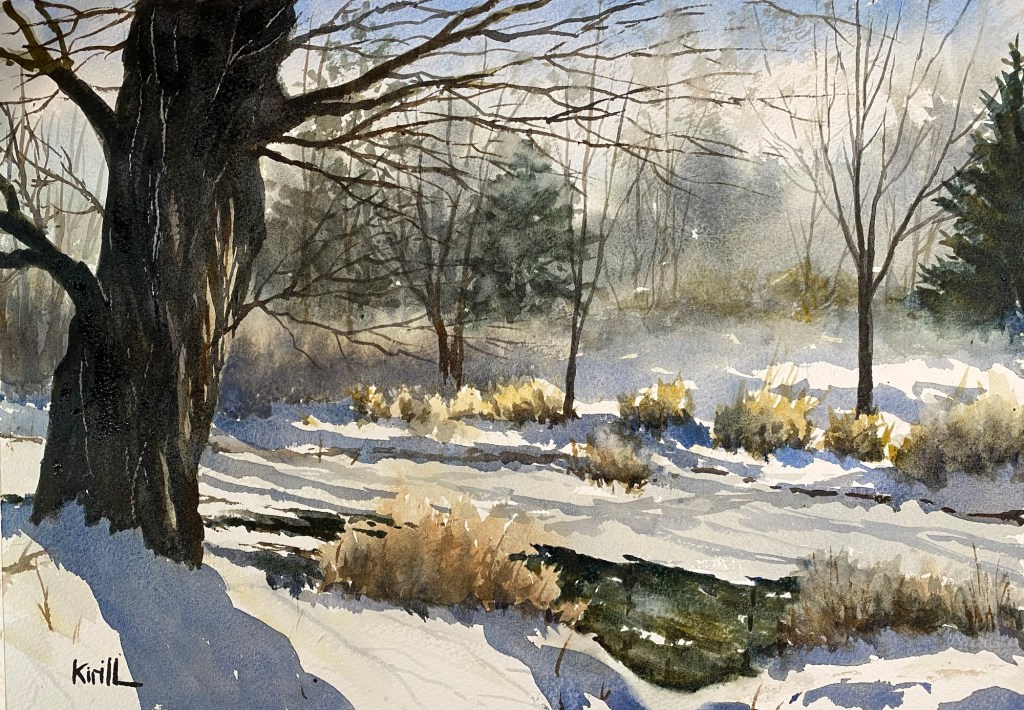
Twisted Old Tree. Watercolor on Arches Rough Paper

If anything, this old Weeping Willow made a fine live model for this watercolor tutorial! Wouldn’t you agree? And, as if this tree isn’t already dramatic on its own; in this painting, I attempt to enhance its presence further by painting it in a near-silhouette, keeping a bit of sunlight on the right side of the trunk, which is reflected by the snow. This allows the viewer’s eyes to feast on the details of the bark – ridges, fissures, holes, and so forth, instead of viewing just a dark form. The shadows on the snow create additional interest and the diffused background; hopefully, incites the viewer to complete the painting in their mind. 

If you decide to follow the tutorial and paint this scene on your own – just remember, there’s no need for details early in the painting. In fact, as an initial wash – the entire tree can be painted in just one (light) tone, some of which, you might decide to leave on the paper when you are finished painting. Move loosely and freely on the paper, as you add water and pigment. This is something I (and most people) struggle with due to a desire for perfection. Save the details for last and good luck!
The Easiest Type of Watercolor- A Silhouette

Art, watercolor tutorials

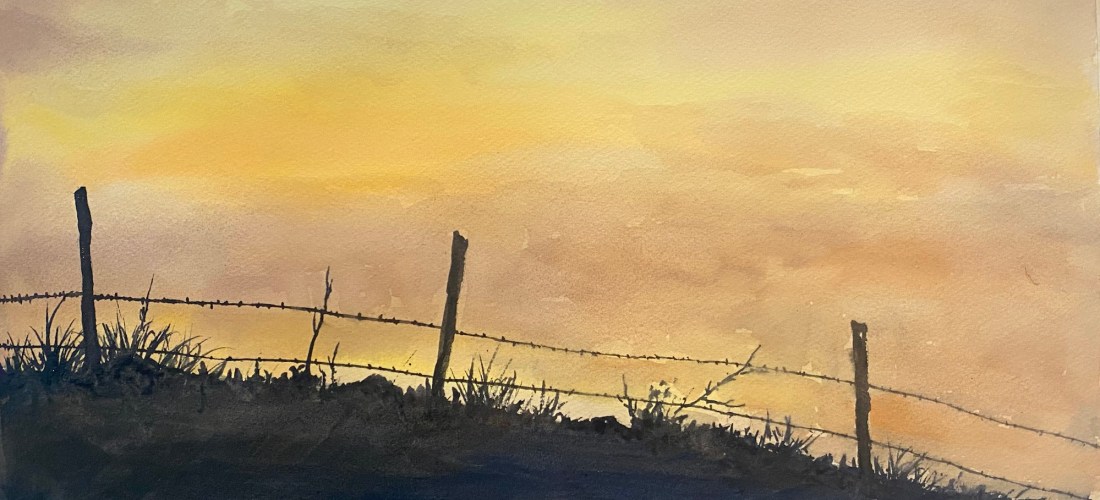
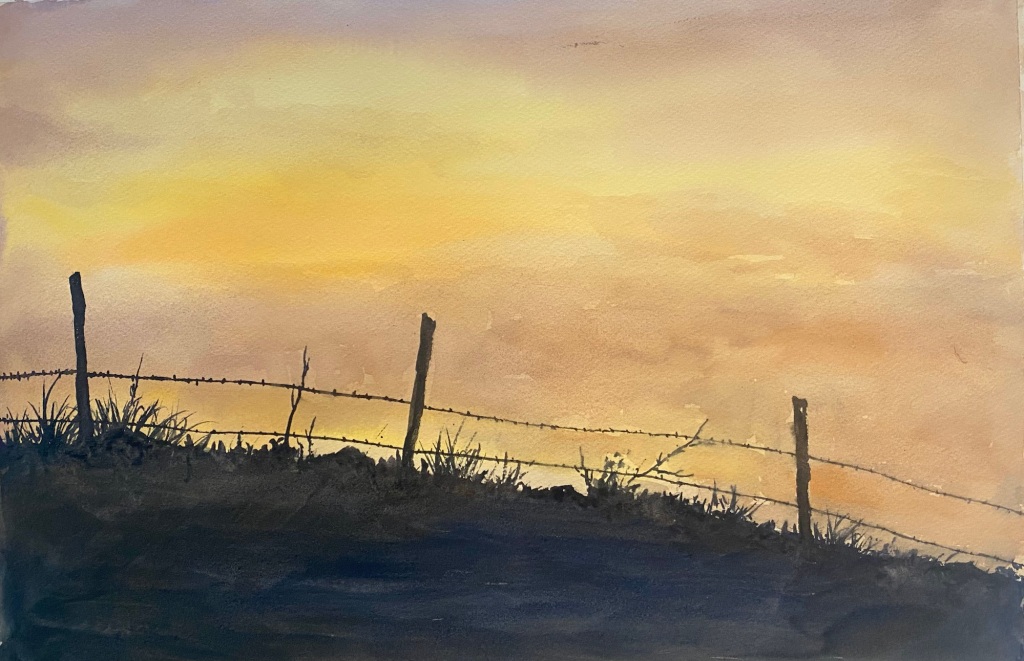
I believe the easiest way to achieve an almost photo-realistic effect in watercolor is to paint a silhouetted landscape! The reason it is less challenging is because there are less problems to solve when it comes to defining values. In a silhouette painting, there are only 2 main values – light and dark. In contrast, when we paint a still life or a painting which takes place during the day with the light coming from a certain direction, there are usually many more values, in addition to only the lightest and darkest areas. Therefore, with a silhouette painting – there is a lot less room for error. 

Silhouette Landscape (watercolor) Inspired by Ferdinand Petrie

I’m not saying that there isn’t a certain degree of difficulty in a silhouette painting. There will be challenges, such as –

1)      Achieving a dark enough value. 

In watercolor, when we initially put down color – it will always dry lighter than when we first applied it. So, the challenge will be in adding additional washes of darker color to finally achieve a dark enough value without creates blossoms or blotches. This will require allowing enough time for the previous washes to dry, as well as bringing in enough color while balancing the color: water ratio.     

2)      Use Complementary Colors.

This goes back to color theory; the colors that work best in a silhouette painting are complementary colors. These colors are opposite each other on the color wheel, and when paired together – they create high contrast.

3)      Painting believable shapes.

With enough drawing practice, the artist will be able to draw (and paint) realistic shapes, such as fence posts or something a bit more fun like a wild-looking bush or tree, without having to worry much about details other than simply filling in that shape with the darkest value.


I’ve created a demonstration (YouTube) link below on this subject. I hope you find this tutorial useful and feel free to send me comments and questions. Thank you.

Don’t Go Chasing Waterfalls – in Watercolor

Art, Outdoor Adventure, watercolor, watercolor tutorials

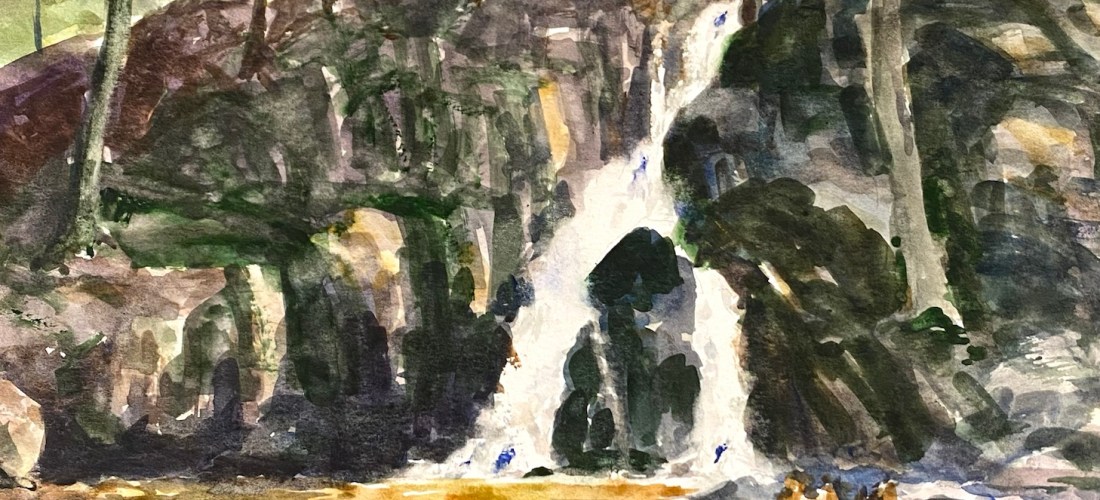
Capturing the movement of a waterfall in watercolor can be quite a chase. In this video tutorial, the waterfall is relatively small compared to some of the ones I’ve seen. Therefore, there is seemingly less work involved in painting the actual waterfall, but most of the work is going to be getting the values right between the darker boulders framing the lighter waterfall, without making the scene too flat. 

In the reference photo above, there is quite a bit going on – rocks, sticks, logs, water, trees, and more rocks. It can be easy to get lost in all the details. The challenge will be to combine all the smaller objects into bigger objects when painting this scene. A value study would surely come in handy here, but I’ve impatiently jumped right into the main painting. How will the painting turn out? Tune in to find out via the link below!

Winter Woodland Watercolor Demo

Art, watercolor, watercolor tutorials

Enough W’s in the subject heading? Recently, I’ve been considering making watercolor videos on YouTube….again. Yes, its true – I’ve made a some painting videos before, but admittedly, the production quality wasn’t there. Most importantly, the consistency wasn’t there either, and as a result – I got crushed by the social media algorithm! Life gets in the way, you know?

This isn’t a New Year’s resolution or anything (I don’t believe in those), but I’m giving it another go. I’ve been learning how to use Adobe Premiere Rush – a free video editing app for smartphones or whichever type screen you prefer to peer into. I found it to be a great tool and easy to use. Maybe I’ll upgrade if I stick with producing video content consistently. Who knows!

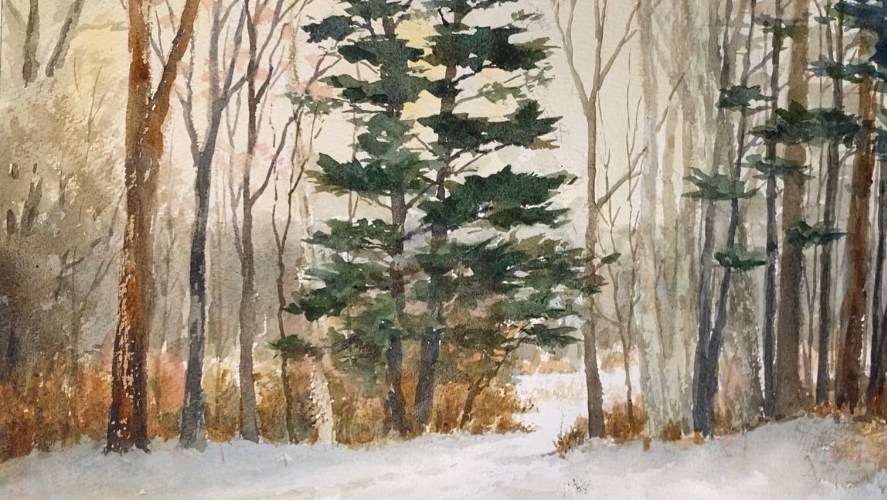
Anyway, I’ve recorded, edited, and published a new video on YouTube called “Winter Landscape with White Pine Tree – Watercolor Demo”. It is a watercolor painting demonstration, which is hopefully easier and more fun to watch, than my previous videos. The entire production process took about 15+ hours….yes, 15+ hours (maybe more). There is a define learning curve here, but lots of time went into creating the painting, learning how to edit, then actually editing the video, then creating a thumbnail using Canva, and so on. YouTube gurus will tell you to outsource the editing and other tasks, which makes a lot of sense, given how labor intensive it is.

Check out the video (link below) and let me know what you think! Which improvements do you suggest? What other types of watercolor videos would you like to see? I appreciate your time and feedback!

Original painting and prints are also available on ETSY!..

Cemetery Light – Watercolor Painting Video

Art, watercolor

In the last post, I created a time lapse of a watercolor light effect painting. This time, I made a different type of video; highlighting some of the aspects of painting a scene from Waterloo Village (a historical landmark in Sparta, New Jersey). I guess the sentiment here is: in a place that is considered dark and dismal, there can beautiful rays of sunshine!

Methodist Cemetery at Waterloo Village